
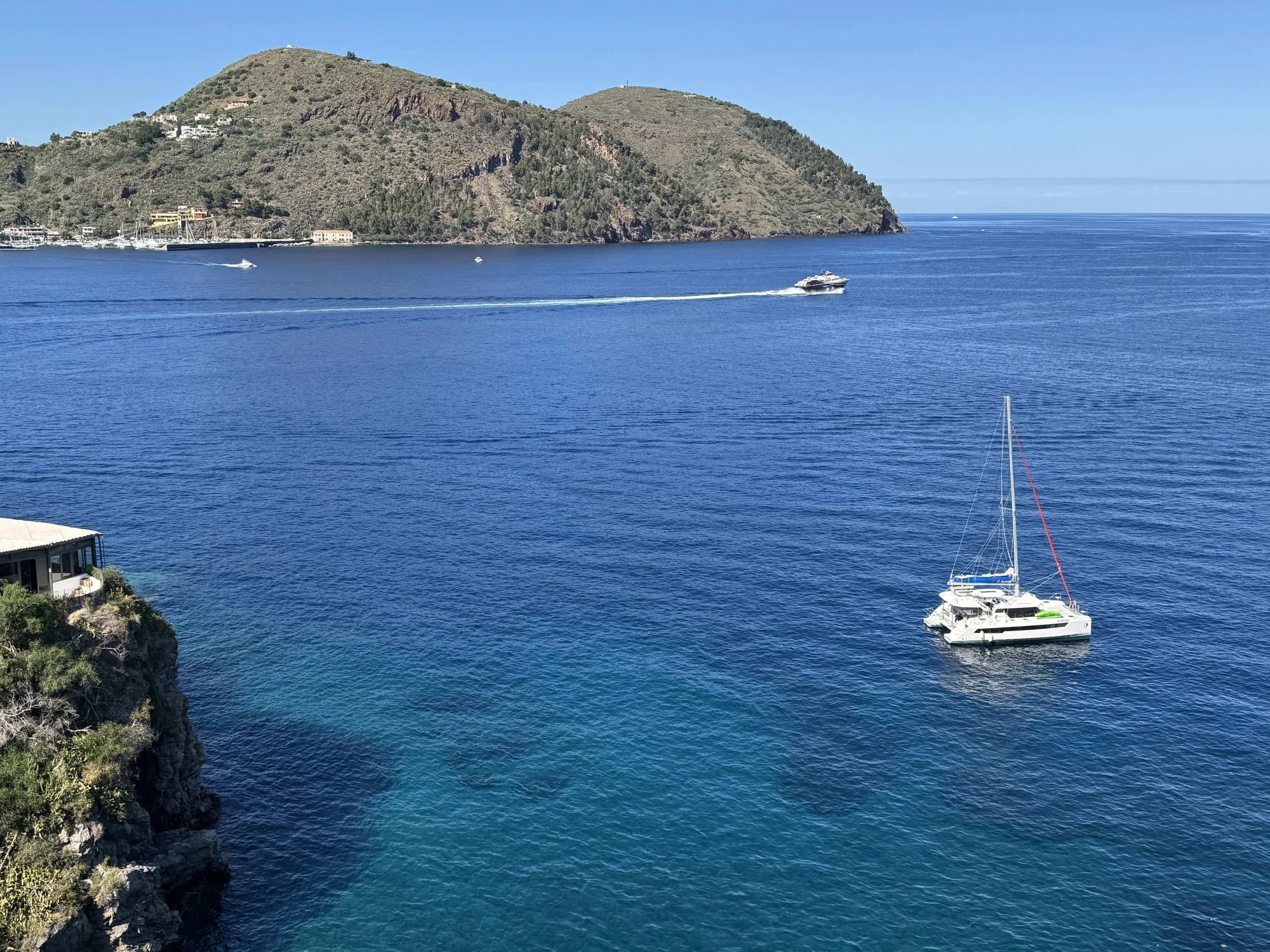
First Time on a Catamaran
We have a confession. When Tim and Donna first stepped aboard a catamaran — before any of this became a thing, before the captain's licenses and the logbooks and the absurdly long and heavy anchor chain — they had questions. A lot of them. And they didn't entirely know who to ask.
So consider this page our version of the answer we wish we'd had. We'll be direct and always honest. If a week at sea is something you're considering but something is holding you back, this is the page for you.
The Big Questions
What you've probably been wondering
Do I need any sailing experience?
Absolutely not. Zero. None. We don't expect you to know a halyard from a happy hour (though by the end of the week you'll know both). You are guests, not crew — unless you want to be involved, in which case we'll happily teach you as much or as little as you like. Many guests who arrive knowing nothing leave knowing how to helm, trim a sail, and catch a mooring ball. It's entirely up to you.
What if I get seasick?
This is far and away the most common concern we hear, and we take it seriously. As a physician, Tim has a very clear-eyed view of what works and what doesn't. Catamarans are dramatically more stable than monohulls, our routes involve mostly protected waters, and we have a full arsenal of prevention and treatment options. We've dedicated an entire page to this topic — see our Seasickness Guide — but the short version is: it's manageable, and we'll make sure you're set up for success before we ever leave the dock.
What is it actually like to live on a boat for a week?
Smaller than your house. But more comfortable than you might think. The catamarans we sail are generally 42–45 feet — which sounds tiny until you realize it means everyone has their own private cabin with an ensuite head (that's boat-speak for bathroom) and that there are multiple distinct “hang-out areas” where you can lounge with others or get plenty of private space if you want. We’ll typically dine together al fresco in the cockpit, swim off the back of the boat before breakfast, and fall asleep to the sound of water. By day three, most guests say it starts to feel remarkably natural. By day six, most guests don't want to go home.
How many other people will be on board?
Typically two to three other couples, plus Tim and Donna as your hosts. We keep things intentionally small — this is not a party boat…at least not a major party boat, it's not a flotilla, and it doesn’t feel like you are on a cruise.
What happens if I don't like it?
Easy…we’ll cast you adrift! No. Genuinely honest answer: in our experience, the people who worry most are often the ones who end up loving it most. But if you're truly uncertain, consider this — we're usually in beautiful places with excellent snorkeling, fresh food, warm water, and spectacular sunsets. Even on the rare day when the passage is bumpy or a passing squall has us all confined to quarters for a few hours, the destination tends to make up for it. We've never had someone leave wishing they'd stayed home. That said, if you're deeply uncertain, let's talk before you book. We'd rather have the right conversation upfront.
What should I pack?
Less than you think. Significantly less. Life aboard rewards simplicity. Soft bags (not hard-sided luggage), quick-dry everything, reef-safe sunscreen, and a couple outfits you'd be comfortable wearing to a nice dinner ashore. Our full packing list is on the What to Expect page — it's comprehensive, opinionated, and, we're told, oddly entertaining.
Is the food good?
We eat extraordinarily well — breakfasts, lunches, and dinners are planned in advance with your preferences in mind. We usually dine ashore most evenings, since there are amazing restaurants and experiences almost everywhere we stop. But if you and the group like to cook, we’ve got all the kitchen appliances and gear we need, including a grill off the back. Nobody has ever gone hungry. Nobody has ever complained about the snacks.
What does a typical day look like?
There is no typical day — and that's somewhat the point. But roughly: coffee and breaky before the sun gets serious, some sailing mid-morning (usually 2–4 hours), an anchorage by early afternoon, swimming and snorkeling, afternoon sundowners in the cockpit, dinner aboard or ashore. Repeat, with variations, for seven of the best days you'll remember for years.
The logistics, demystified
✈️
Getting There
We'll share detailed arrival instructions once you book. Most charter bases are straightforward to reach, and we coordinate arrival times to make sure everyone gets aboard smoothly. A lot of the bases have pools and all of them have local restaurants and bars either on-base or a short walk away.
📡
Connectivity
Varies by location. In the BVIs we’ll have on-board WiFi with generally great service. In the Med, we'll have cell service in most anchorages. French Polynesia, less so. Most guests report that being mostly offline is better than they expected.
"We genuinely had no idea what we were getting into. By day two we were hooked. By day five we were asking Tim how we become the kind of people who do this every year."
— Past Guest, BVIs